


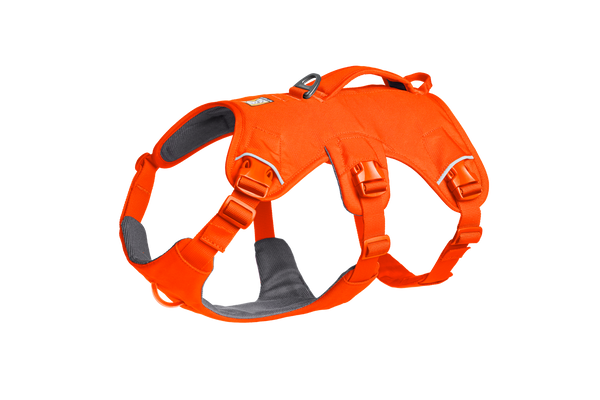
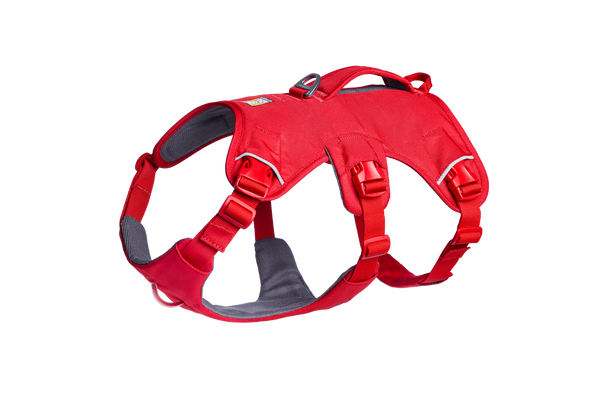
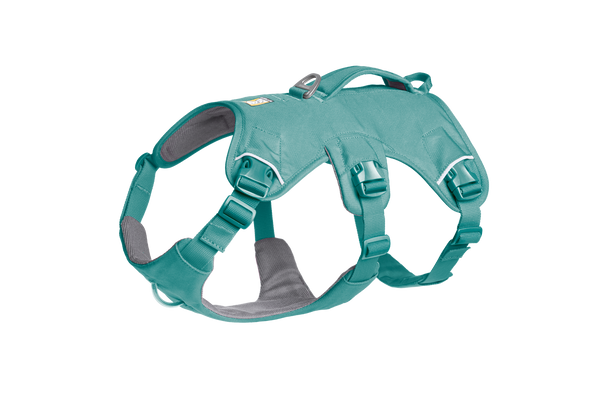
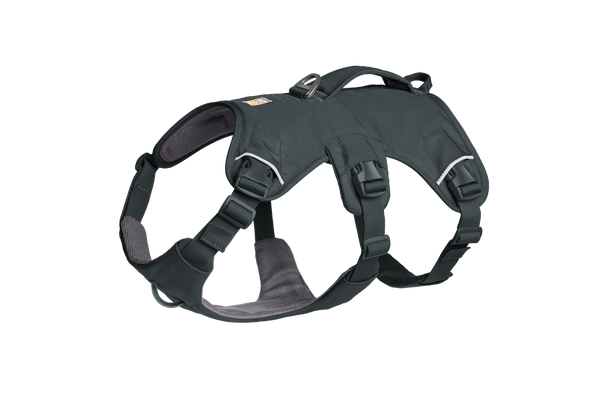


Built Different: The Material Behind the Front Range® Flex Collection
Have you ever looked carefully at modern running shoes and noticed what the upper portion is made of?
In many of today’s athletic shoes, you’ll find that there are no distinct fabric panels or stitched-together components in the upper shoe. It’s just one continuous piece of mesh that holds its shape around your foot. That material is called engineered knit, and it’s the innovative textile behind our new Front Range™ Flex Collection. It gives those running shoes a sock-like fit, with targeted support zones woven in the one-piece upper.

As this material began to show up more and more across the footwear industry, our product team started paying close attention. The way it conformed without the usual layers of structure underneath, and the way it flexed, moved, and breathed—there was so much potential. It didn’t take long before we began thinking of all the ways we could use it.
Why We Love Engineered Knit
Most of Ruffwear's harnesses and packs are built from woven fabrics, similar to what you’d find in a rain shell or pack. The process involves an interlocking warp and weft that is coated to hold structure and resist water. That coating is doing exactly what it's designed to do, blocking water, abrasion, and delamination. Basically, it’s acting as a barrier.

But that barrier doesn’t always ventilate very well. A dog’s fur — particularly in a double-coated breed — actively regulates body temperature on its own, trapping and releasing air, breathing in a way that keeps them comfortable. Engineered knit allows this natural regulation to happen without getting in the way of it.
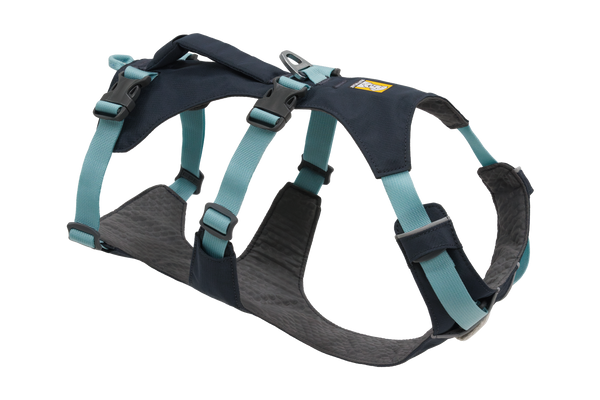
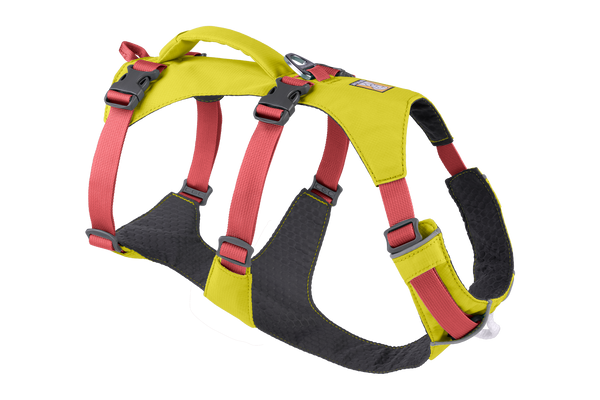
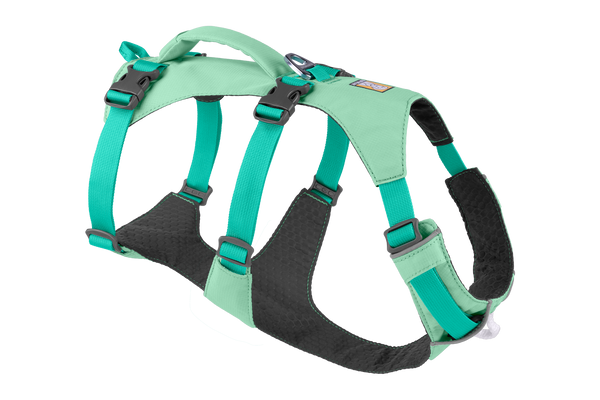
“Engineered knit is what makes our new Front Range® Flex harness so breathable, where other materials can't quite get there while still remaining structurally sound,” says Monica Broder, Ruffwear Senior Design Manager.

The difference is in how it’s made. The yarn of the knit is looped continuously to create a structure that has some dimensional stability. Exterior coating isn’t required here, because the construction itself holds everything together. What it gives you is a breathable structure that sheds water and allows air to move around freely.
Driven By Less
As we discovered more about this new material, breathability wasn’t the only selling point. The manufacturing process itself represented a huge shift in the way we approached responsibly-made products.
Most outdoor gear is created with a traditional cut-and-sew technique. It starts with cutting shapes out of a bolt of fabric—like panels, loops, reinforcement pieces, or any detail that needs to become a distinct feature—and then stitching them together. This is how soft goods have been made for as long as there have been soft goods, and it works.

But no matter how well you plan or how precisely you lay out your pieces, there will always be off-cuts. This is material that gets trimmed away and then has to be recycled—which requires its own energy input. Otherwise, it’s discarded. Think of it like rolling out cookie dough and pressing in cookie cutters. You do your best to use every inch of dough, but there's always some leftover. And unlike baking, you can't just press the scraps back together and start again.
Engineered knit eliminates the off-cut problem almost entirely through an additive process that builds shapes instead of cutting them out. As Ruffwear Product Line Manager Cristina Stavro explains, "With this process, you can knit just the shape that you need and end up with very minimal waste. Generally all you have is just the yarns coming off the end.”
For example, the light loop feature on a typical harness is made from a small webbing attachment that’s constructed with a separate piece of fabric. It’s been cut from a bolt or created from an off-cut, then sewn into the shell in a multi-step process that involves careful, detailed handwork.
On the Front Range® Flex harness, the light loop is knitted directly into the harness and doesn’t exist as a separate component. You’ll find the same integrative technique on the Front Range® Flex collar. The ID attachment loop is knitted into the collar itself, and reflectivity is heat-transferred instead of sewn on.

When you’re constructing a piece of gear using the cut-and-sew method, every point where layers of material meet is a point of inherent rigidity. When you remove those points you get something that conforms around a dog’s body from the get-go.
These kinds of details give every piece in the Front Range® Flex Collection that seamless quality, where almost nothing is added on and there is less material stack-up. “It’s love-at-first-fit. When you put it on your dog, it's going to instantly take to whatever their shape is. Anytime something takes on your shape and quickly adapts, the more it moves with you and becomes that piece of gear you don't even know is there,” says Stavro.

Meeting Our Standards
Taking a material like this out of its original context and asking it to do something new and different meant we needed to thoroughly test our work, by deliberately trying to surface problems we might not otherwise know about.
"Dogs can always find a way to make gear fail. We celebrate that by building things that stand up to the challenge of what hardcore users they really are,” says Stavro.
Engineered knit already came with a strong performance record in the footwear industry. But dogs interact with gear differently than people (and feet) do, and every piece of Ruffwear equipment must be tested under high-stress conditions to ensure that it upholds our standard of quality control.

"We put it through all the same lab testing, all the same wear testing — if not more — than our past harnesses. We didn't just say, ‘Great, that works in a shoe, let’s put it everywhere else.’ Just like any new piece of gear, we made sure it would stand up to years of daily wear,” says Stavro.
Working to create a specific yarn blend that would balance breathability with strength, abrasion resistance, and UV stability, we gave engineered flex the same attention to detail and eye for durability the Ruffwear brand is known for. It passed every test, and impressed us with its ability to dry quickly and stay colorfast.

What Comes Next
The Front Range® Flex Collection represents a big debut for engineered knit, and we’re already thinking about how we can utilize it in future projects. The more deeply we explore this material, the more places we see it going—and we can’t wait for the next iteration.
This is only the beginning, as we find more ways to increase our knowledge and continue to outdo ourselves, making bold new gear that creates less waste and uses fewer resources, all while giving our dogs the freedom and comfort to explore the outdoors.


